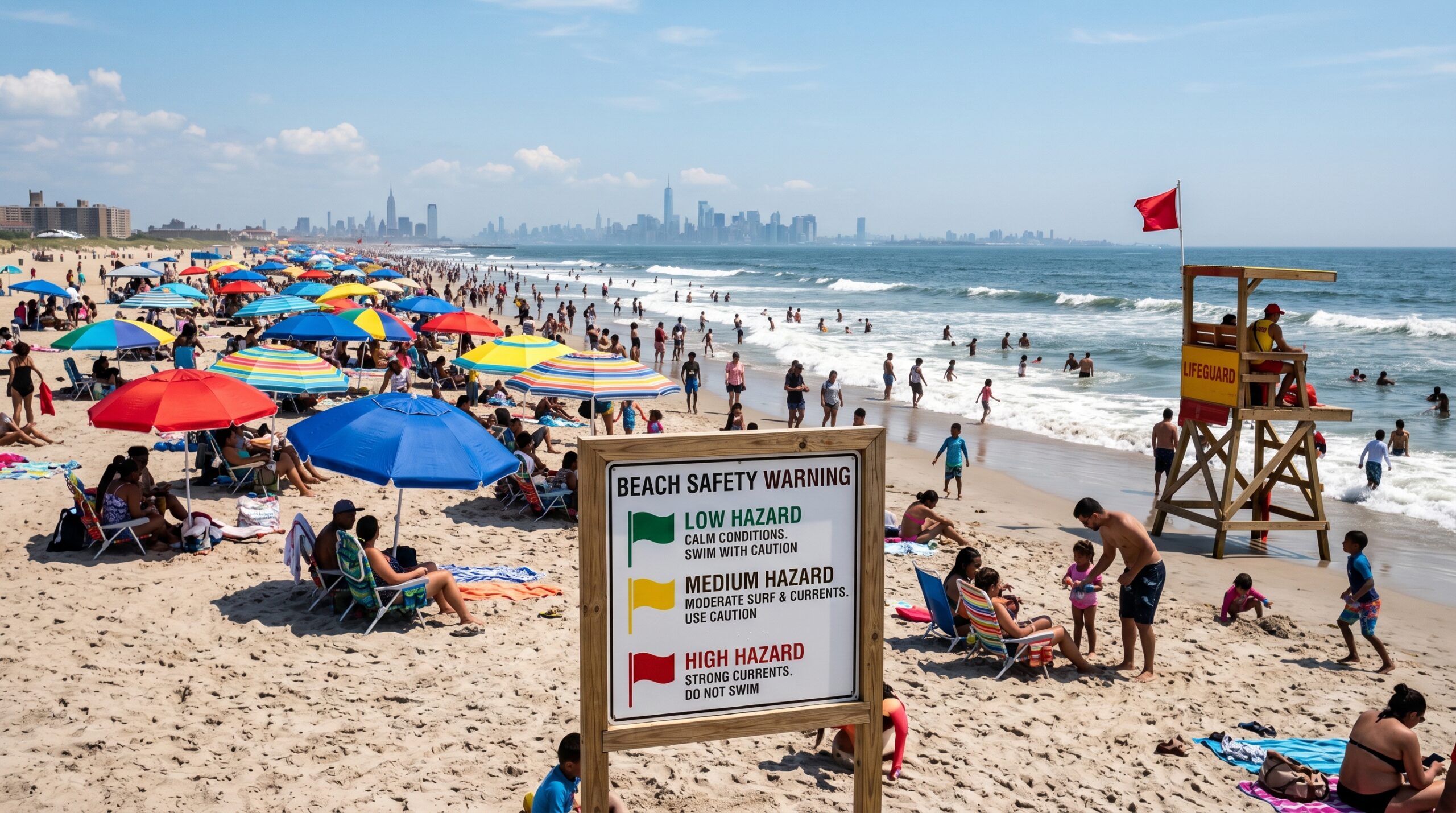
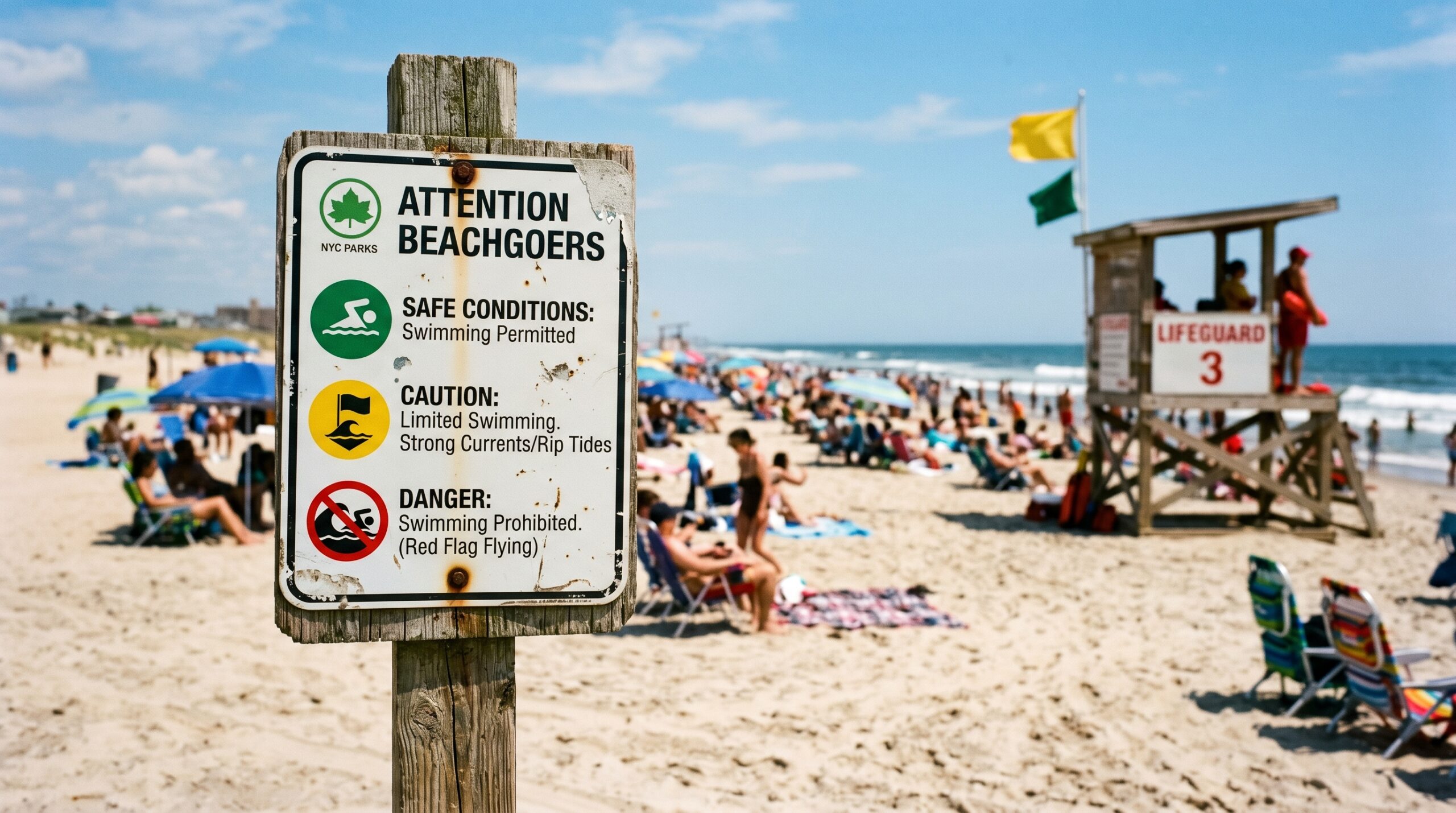
A day at the beach is one of the best ways to enjoy New York City’s summer season. However, before jumping into the water, visitors should pay attention to the warning signs posted at public beaches.
On this page
These signs provide important information about water quality, swimming conditions, and public safety. Understanding what each warning means can help beachgoers make informed decisions and avoid potential health risks.
In this guide, we’ll explain the most common NYC beach warning signs and what they mean for swimmers.
Why NYC Uses Beach Warning Signs
New York City regularly monitors public beaches throughout the swimming season. Officials test water quality, track weather conditions, and assess potential safety hazards.
When conditions change, warning signs are posted to inform visitors about risks such as:
High bacteria levels in the water
Dangerous swimming conditions
Strong currents
Beach closures
Environmental hazards
These notices help protect public health and ensure visitors can safely enjoy the city’s beaches.
Green Signs Mean Swimming Conditions Are Normal
A green status generally indicates that a beach is open and conditions are considered safe for swimming.
When visitors see a green advisory status, it typically means:
Water quality meets safety standards
No significant hazards have been identified
Lifeguard services are operating during designated hours
Even under normal conditions, beachgoers should follow posted rules and swim only in designated areas.
Yellow Advisory Signs Mean Extra Caution Is Needed
A yellow advisory sign does not necessarily mean a beach is closed.
Instead, it serves as a warning that certain conditions may increase health risks.
Common reasons for a yellow advisory include:
Elevated Bacteria Levels
Heavy rainfall can wash pollutants into nearby waterways, temporarily increasing bacteria concentrations.
Recent Storm Activity
Storm runoff may affect water quality even if conditions appear normal.
Increased Health Risks for Vulnerable Groups
Young children, older adults, and people with weakened immune systems may be advised to avoid swimming until conditions improve.
Visitors should carefully read advisory notices to understand the specific concern.
Red Signs Mean the Beach Is Closed
A red closure sign is the most serious warning visitors may encounter.
When a beach is closed, swimming is not permitted.
Closures may occur due to:
Unsafe bacteria levels
Severe weather conditions
Dangerous surf
Environmental contamination
Public safety concerns
Ignoring a beach closure can increase the risk of illness or injury.
If a red sign is posted, visitors should remain out of the water until officials lift the closure.
Why Beaches Often Receive Advisories After Heavy Rain
One of the most common reasons for beach advisories in New York City is heavy rainfall.
Rainwater can carry pollutants from:
Streets
Storm drains
Animal waste
Urban runoff
These contaminants can temporarily affect water quality and increase bacteria levels.
As a result, health officials may issue advisories or closures until testing confirms the water is safe again.
Where to Check NYC Beach Conditions Before Visiting
Before heading to the beach, visitors can check current conditions online.
The city provides updates regarding:
Beach openings and closures
Water quality advisories
Weather-related alerts
Swimming conditions
Checking status updates before leaving home can help avoid unexpected closures and ensure a safer beach experience.
What to Do If You See a Warning Sign
If you encounter a beach warning sign:
Read the notice carefully.
Follow any instructions provided by city officials.
Avoid entering the water if a closure is in effect.
Pay special attention if traveling with children or elderly family members.
Monitor updates if conditions are expected to improve later in the day.
Taking a few moments to understand the warning can help prevent health issues and ensure a safer visit.
Final Thoughts on NYC Beach Warning Signs
NYC beach warning signs are designed to keep visitors informed and safe. While green signs indicate normal conditions, yellow advisories suggest caution, and red signs mean swimming is prohibited.
Understanding these alerts can help beachgoers make better decisions and enjoy New York City’s beaches responsibly. Before your next beach trip, take a moment to check current conditions and always follow posted safety guidance.