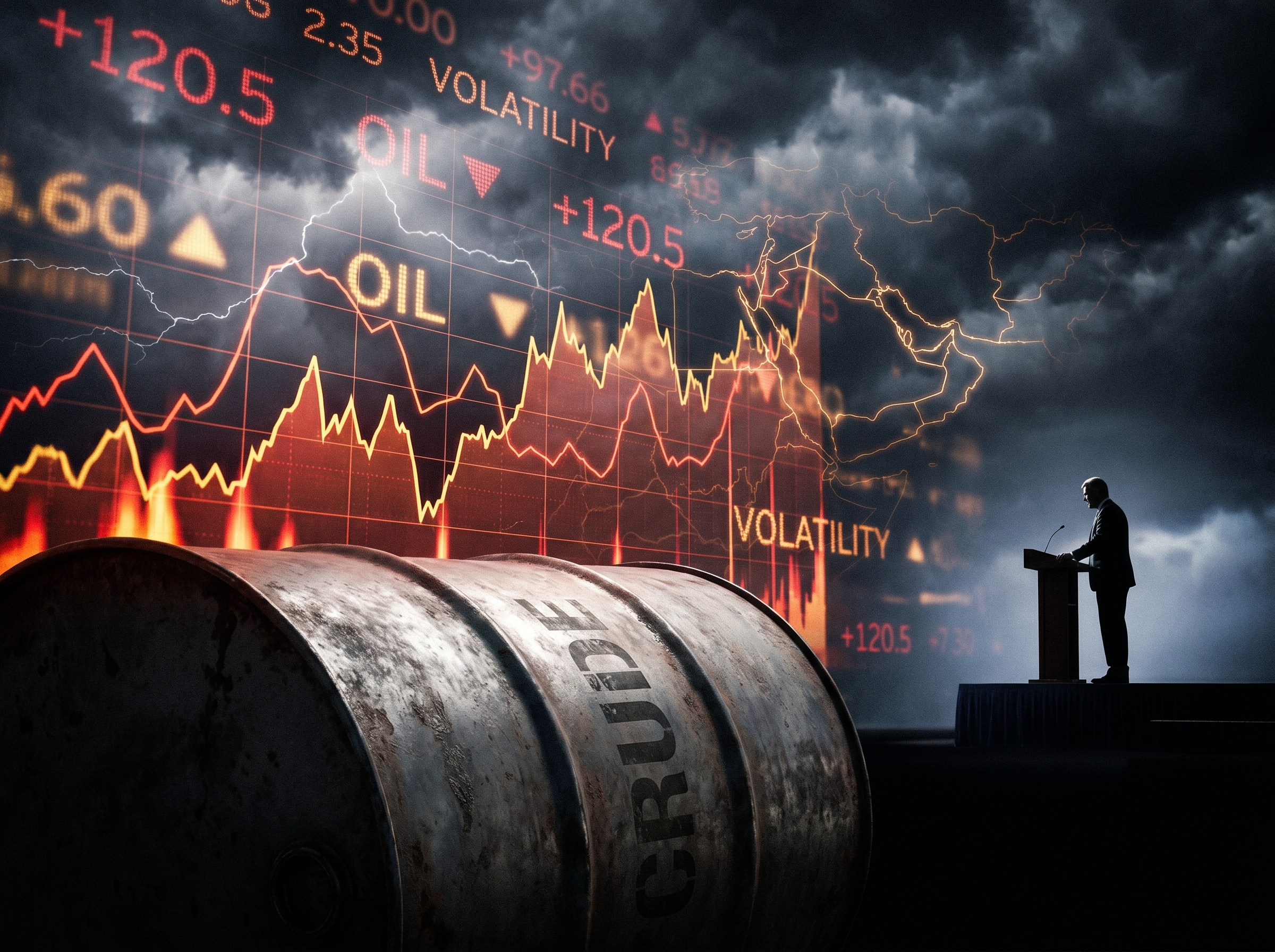
👉 oil prices jumped after Donald Trump rejected Iran peace proposal

Oil Prices Jumped 4% After Donald Trump Rejected Iran’s Peace Proposal

Oil prices jumped 4% after Donald Trump rejected Iran’s peace proposal, increasing fears over the Strait of Hormuz and global energy supply disruption.

👉 Strait of Hormuz oil tanker tensions global energy crisis

Oil Prices Jumped 4% After Donald Trump Rejected Iran’s Peace Proposal

Global markets reacted sharply after oil prices jumped 4% after Donald Trump rejected Iran’s peace proposal, raising fears that tensions in the Middle East could escalate once again.

The sudden rise in crude oil prices came after President Donald Trump called Iran’s latest response to a U.S. peace proposal “TOTALLY UNACCEPTABLE” in a social media post.

Investors immediately worried that:

  • The Strait of Hormuz could remain closed
  • Oil supply disruptions may continue
  • Global inflation could worsen again

As a result, Brent crude surged above $105 per barrel while global markets turned volatile.

Why Oil Prices Jumped 4% After Donald Trump Rejected Iran’s Peace Proposal

The main reason oil prices jumped 4% after Donald Trump rejected Iran’s peace proposal is because markets fear prolonged instability in the Middle East.

The United States and Iran have been involved in a tense 10-week conflict that has already:

  • Disrupted shipping routes
  • Reduced global oil supply
  • Increased fuel prices worldwide

When hopes of a peace agreement faded, traders reacted immediately.

What Did Iran Propose?

According to reports, Iran’s peace proposal included several conditions:

  • Removal of U.S. sanctions
  • Release of frozen Iranian assets
  • End of the naval blockade
  • Recognition of Iran’s role in the Strait of Hormuz

Iran reportedly described the offer as “generous and responsible.”

However, the proposal did not fully satisfy U.S. demands regarding Iran’s nuclear program.

Trump’s Response Triggered Market Panic

The situation escalated when Donald Trump publicly rejected the proposal.

Trump wrote:

“TOTALLY UNACCEPTABLE”

Although he did not provide detailed reasoning immediately, the statement signaled that negotiations were breaking down.

This is exactly why oil prices jumped 4% after Donald Trump rejected Iran’s peace proposal — because investors feared the conflict could continue for much longer.

Strait of Hormuz Remains the Biggest Concern

The Strait of Hormuz is one of the world’s most important oil routes.

Around:
👉 20% of global oil passes through this narrow waterway.

Because of the ongoing conflict:

  • Commercial shipping has slowed
  • Tankers face security risks
  • Insurance costs have increased

Reports suggest the strait remains partially restricted, which continues to pressure global energy markets.

Why the Strait of Hormuz Matters So Much

The reason the Strait of Hormuz matters is simple:

👉 The world still depends heavily on oil.

Countries relying on this route include:

  • Saudi Arabia
  • Iraq
  • UAE
  • Kuwait

If oil cannot move freely:

  • Supply decreases
  • Prices rise rapidly

That’s why even political statements can move markets dramatically.

👉 Read more: Oil Prices Dropped and Stocks Surged After Iran War — What Happened?

How Markets Reacted After Oil Prices Jumped 4%

After oil prices jumped 4% after Donald Trump rejected Iran’s peace proposal, multiple financial markets reacted negatively.

📉 Asian Markets Fell

Several Asian stock markets declined sharply due to fears of:

  • Higher energy costs
  • Slower economic growth
📉 Indian Markets Crashed

India’s stock market reportedly lost billions in value as oil prices surged. ()

💵 Currency Markets Became Volatile

The Indian rupee weakened significantly against the U.S. dollar due to rising crude oil prices.

Why Oil Prices React So Fast to Geopolitical News

Oil markets are extremely sensitive to uncertainty.

When traders fear:

  • Supply disruption
  • War escalation
  • Shipping restrictions

They begin buying oil aggressively.

This drives prices upward very quickly.

The moment peace talks weaken:
👉 Markets assume oil supply could shrink further.

How This Could Affect Gas Prices in the USA

One major concern after oil prices jumped 4% after Donald Trump rejected Iran’s peace proposal is fuel prices.

If oil remains above $100:

  • Gasoline prices may rise
  • Transportation costs could increase
  • Inflation may return

This is especially important in the United States, where consumers are highly sensitive to gas prices.

Inflation Fears Are Returning

Higher oil prices affect almost everything:

  • Shipping
  • Manufacturing
  • Food transportation
  • Airline costs

As energy becomes more expensive:
👉 Everyday products also become more expensive.

That’s why central banks and governments closely monitor oil prices.

Could the Conflict Escalate Further?

Right now, the situation remains fragile.

Although a temporary ceasefire exists:

  • Drone attacks continue
  • Regional tensions remain high
  • Shipping disruptions persist

Analysts warn that if diplomacy fully collapses:
👉 Oil prices could rise even more.

Why Investors Are Nervous

The global economy is already facing:

  • Inflation pressure
  • High interest rates
  • Weak growth in some countries

Another major oil shock could:

  • Hurt businesses
  • Reduce consumer spending
  • Slow economic recovery

That’s why markets reacted strongly after Trump’s rejection.

What Happens Next?

Several possible outcomes could happen next:

⚠️ 1. Peace Talks Resume

Negotiations could continue through international mediators.

⚠️ 2. Oil Prices Rise Further

If the Strait of Hormuz stays restricted, prices may continue climbing.

⚠️ 3. Global Markets Become More Volatile

Stock markets may fluctuate based on geopolitical developments.

FAQs: Oil Prices Jumped 4% After Donald Trump Rejected Iran’s Peace Proposal

❓ Why did oil prices jump after Trump rejected Iran’s proposal?

Because investors feared the conflict would continue and oil supply disruptions would worsen.


❓ What is the Strait of Hormuz?

It is a major global oil shipping route connecting the Persian Gulf to international markets.


❓ Could gas prices rise in the USA?

Yes. Higher oil prices often lead to higher gasoline prices.


❓ Why are markets reacting so strongly?

Oil prices affect inflation, transportation, manufacturing, and global economic growth.


❓ Is the Iran conflict over?

No. The situation remains uncertain despite ongoing ceasefire discussions.

👉 Read more: Why Oil Prices Dropped and Stocks Surged After Iran War

👉 Read more: What is the Strait of Hormuz and Why It Controls Global Oil Prices?

Leave a Reply

Your email address will not be published. Required fields are marked *